
Hospital Bag Checklist for Kenyan Moms: What to Pack for Labour, Birth & Postpartum Including 100% Organic Cotton Care Essentials
Preparing Your Hospital Bag for Birth in Kenya
As your due date approaches, one question becomes increasingly important:
What should I actually pack in my hospital bag?
For first-time mothers especially, it is easy to either pack far too much or suddenly realise on the day of admission that something useful was left at home.
A well-prepared maternity hospital bag should support three separate stages: labour, the birth itself and postpartum recovery.
It should also include what your newborn may need during the first hours and days after delivery.
For Kenyan mothers, the exact requirements can vary depending on the maternity facility. A private hospital in Nairobi may provide certain newborn or postpartum supplies, while another hospital in Mombasa, Kisumu, Nakuru or a smaller town may ask mothers to bring more of their own items.
That is why the best hospital bag checklist in Kenya begins with one important step:
Ask your maternity hospital what they provide and what they expect you to bring.
Once you know that, you can build the rest of your bag around comfort, hygiene and practical recovery.
When Should a Kenyan Mom Pack Her Hospital Bag?
You do not need to wait until labour begins.
A good approach is to have most of your hospital bag prepared several weeks before your expected delivery date, particularly if you live far from your chosen facility or have been advised that you may need earlier medical attention.
If you live in Nairobi and your maternity hospital is nearby, you may feel that forgotten items can easily be brought later. But traffic, unexpected labour and hospital admission times can quickly make this inconvenient.
For mothers travelling from areas such as Thika, Machakos, Naivasha, Nyeri, Kitale, Kakamega or Meru to larger maternity facilities, packing in advance can be even more useful.
Keep essential documents, a few personal items and the most important postpartum supplies together so that the bag is ready when needed.
Complete Hospital Bag Checklist for Kenyan Moms
Use this as your master checklist and adjust it according to your hospital's instructions:
-
Identification documents, maternity records, clinic book, insurance or payment information and any hospital admission documents
-
Mobile phone, charger and emergency contact details
-
Comfortable loose clothing for labour and recovery
-
Light robe or sweater
-
Slippers or easy-to-wear footwear
-
Comfortable underwear or disposable postpartum protection
-
Maternity pads for postpartum bleeding
-
Nursing bras
-
Nursing pads for breast-milk leakage
-
Personal toiletries and sanitary items
-
Towel, face cloth and tissues if required by your facility
-
Water bottle
-
Lip balm
-
Hair ties or head covering according to personal preference
-
Newborn clothes
-
Baby hats, socks or mittens depending on weather
-
Baby blanket or swaddle
-
Newborn nappies
-
Gentle baby wipes
-
Baby changing essentials
-
Clothes for mother to wear home
-
Clothes for baby to wear home
-
Small bag for used clothing
-
Any prescribed medicines your maternity team has told you to carry
The items you actually need may vary, so check with your chosen hospital in Kenya before finalising your bag.
Important Documents for Labour and Delivery in Nairobi and Across Kenya
Documents are among the easiest items to forget because most attention goes to clothes and baby supplies.
Before travelling to your maternity facility in Nairobi, Mombasa, Kisumu or elsewhere in Kenya, place all important medical and admission documents together in one folder.
Your maternity records help healthcare professionals understand important information about your pregnancy and previous appointments.
If you are using health insurance or another payment arrangement, keep the required identification and approval information accessible rather than buried at the bottom of your bag.
It can also help to save important contacts on your phone, including your maternity facility, partner or birth companion and another trusted family member.
Comfortable Labour Clothing for Kenyan Hospitals
Comfort matters during labour.
You may spend several hours walking, sitting, lying down or changing positions, depending on your labour and medical care.
Choose loose, breathable clothing that is easy to change.
Kenya's climate also varies. A warm afternoon in Mombasa feels very different from a cool morning in Nairobi, Nakuru or Nyeri, so a lightweight layer or robe may be useful even if you expect the maternity ward to be warm.
Avoid packing your favourite or most expensive clothing for labour because fluids and stains are possible.
Comfort and practicality should come first.
Postpartum Bleeding Essentials for Moms in Kenya
After childbirth, vaginal bleeding and discharge known as lochia occurs as the body recovers.
This happens after both vaginal and Caesarean births.
WHO postnatal guidance includes assessment of vaginal bleeding and monitoring for signs of postpartum haemorrhage as an important part of care after birth. Heavy bleeding can be a danger sign and should not simply be managed at home with more absorbent products.
For normal postpartum bleeding, maternity pads are useful because postpartum flow is different from a regular menstrual period.
A hospital bag for a new mom in Kenya should therefore include dedicated postpartum protection rather than relying only on a few ordinary light-flow pads.
This is particularly useful whether you are delivering in Nairobi, Kisumu, Eldoret, Nakuru or any other Kenyan maternity facility.
Why Include Maternity Pads in Your Kenya Hospital Bag?
Maternity pads are designed around postpartum use.
In the first days after delivery, comfort, coverage and absorbency become especially important.
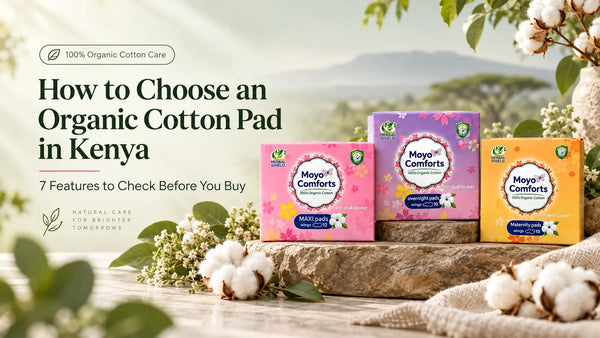
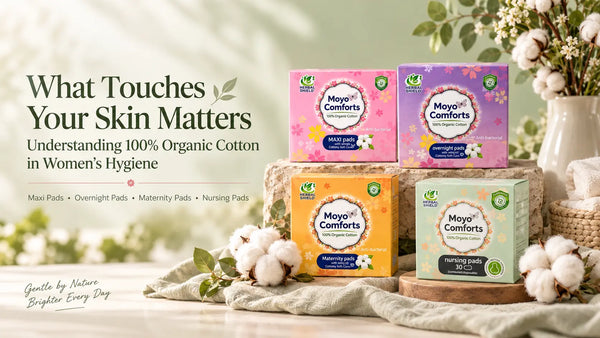
Moyo Comforts currently offers Maternity Pads designed for postpartum care, and its live product information identifies an organic-cotton maternity-pad range. Moyo's own recent educational content describes the Maternity Pads as having a 100% organic cotton coversheet, alongside extended coverage and wings.
That distinction matters.
It is more accurate to say:
“Maternity Pads with a 100% organic cotton coversheet”
rather than claiming every material in the entire finished pad is cotton unless product-level composition documentation confirms that.
Why Consider 100% Organic Cotton Care Essentials After Birth?
After delivery, many mothers become more conscious of the materials touching sensitive areas of the body.
Organic cotton should not be marketed as a treatment for postpartum wounds, infection or irritation.
Instead, its strongest role is as a material and comfort preference.
For a mother building a hospital bag in Nairobi, Mombasa or anywhere in Kenya, an organic cotton skin-contact surface may appeal because she prefers a clearly identified cotton material against her skin.
This is especially relevant for products that remain in close contact with the body, such as maternity pads and nursing pads.
However, absorbency, fit, hygiene and regular changing remain just as important as the material itself.
Organic cotton does not replace appropriate medical care.
Breastfeeding Essentials for Kenyan New Moms
Your hospital bag is not only about labour.
Breastfeeding may begin soon after birth, and the early days can bring several practical surprises.
WHO recommends support for early breastfeeding as part of essential newborn and postnatal care.
For mothers preparing for delivery in Kenya, useful breastfeeding items may include comfortable nursing bras, a breastfeeding-friendly top and nursing pads.
Do not worry about filling your hospital bag with every breastfeeding gadget available online.
Start with simple essentials and add more later according to your own feeding experience.
Why Pack Nursing Pads in Your Nairobi Hospital Bag?
Breast-milk leakage can occur for some breastfeeding mothers, especially as milk production begins to adjust.
Nursing pads sit inside the bra and absorb leaking breast milk before it reaches clothing.
Moyo Comforts' current range includes 100% Organic Cotton Disposable Nursing Pads with 30 pads per pack. The brand's existing nursing-pad education positions them as a disposable option for breast-milk leakage during breastfeeding.
For a new mother in Nairobi, Kisumu, Nakuru, Eldoret or Mombasa, disposable nursing pads can be convenient because they can be changed when damp and disposed of without requiring washing during the hospital stay.
A few fresh pads in your hospital bag can also be useful on the journey home.
How Often Should Nursing Pads Be Changed After Birth?
There is no single number of hours that works for every mother.
Some women leak more than others.
The most practical approach is to replace nursing pads when they become damp, wet, soiled or uncomfortable.
Do not keep a saturated pad against sensitive nipple skin simply because you want to make your supply last longer.
If you experience cracked or bleeding nipples, significant pain, difficulties with attachment or other breastfeeding concerns, speak with a midwife, nurse, doctor or qualified breastfeeding professional rather than relying on nursing pads alone.
Baby Wipes and Newborn Care in Kenya
Newborn care supplies are another important part of your hospital bag.
Your maternity facility may have its own newborn cleaning recommendations, so follow your healthcare team's instructions first.
WHO advises keeping newborn skin and cord care hygienic and recommends delaying the first bath for at least 24 hours.
For routine cleaning when appropriate, parents often pack wipes alongside nappies and clothing.
Moyo Comforts' current Sensitive Baby Wipes are listed as 80 wipes per pack, and the brand's product range identifies them as part of its baby-care offering.
For the Moyo blog, keep Baby Wipes separate from the organic-cotton message because the wipes are not an organic-cotton product.
This helps keep product communication accurate.
Packing for a Newborn in Nairobi, Mombasa and Other Kenyan Cities
Newborn clothing should be simple.
You do not need to bring an entire wardrobe to the hospital.
Think about the expected length of stay, weather and what your hospital already provides.
A mother delivering in warm coastal Mombasa may pack slightly differently from a mother giving birth during a cooler period in Nairobi, Nakuru, Eldoret or Nyeri.
The goal is to keep baby comfortably warm without overheating.
Include appropriate newborn clothing, a blanket or swaddle, nappies and whatever additional supplies your maternity hospital has specifically requested.
What Should a Kenyan Mom Pack for a C-Section?
Even if you are planning a vaginal birth, circumstances can change.
If you have a scheduled Caesarean section or have been told that one is more likely, consider clothing that does not press tightly against the lower abdomen.
Loose dresses, high-waisted comfortable underwear and easy footwear can make movement more manageable.
Your medical team will guide wound care.
Avoid presenting any pad, pants or cotton product as something that protects a surgical incision from infection.
A maternity product can support bleeding management and comfort, but surgical wound care should follow instructions from healthcare professionals.
Going-Home Essentials for New Moms in Kenya
The journey home deserves its own small amount of planning.
Whether you are travelling across Nairobi, heading from a maternity facility in Kisumu, returning home in Nakuru, travelling through Eldoret, or making a longer journey toward Kitale, Kakamega, Meru or Machakos, wear something loose and comfortable.
Keep a fresh maternity pad available.
If breastfeeding, keep additional nursing pads accessible rather than packed underneath everything else.
It can also be sensible to carry extra newborn clothing and nappies in a smaller bag for easier access during the journey.
How Much Should You Pack for a Kenya Maternity Hospital?
More is not always better.
An overloaded maternity bag becomes difficult to organise and can make it harder to find the one item you actually need.
Separate your supplies into categories: mother, baby, documents and going-home essentials.
If your facility in Nairobi or another Kenyan city expects a stay of more than one day, ask them how many baby clothes, nappies or postpartum pads they recommend bringing.
Do not rely entirely on social-media hospital bag videos from other countries because maternity-facility practices differ.
A checklist created for a hospital in the United States, UK or Dubai may not match what a hospital in Nairobi, Mombasa or Kisumu expects.
Building an Organic Cotton Postpartum Kit in Kenya
For mothers who specifically want organic cotton care, the hospital bag can include two clearly differentiated items.
For postpartum bleeding, consider maternity pads with an organic cotton skin-contact coversheet.
For breastfeeding leakage, consider 100% organic cotton nursing pads.
This creates a simple postpartum care combination:
Postpartum bleeding → Maternity Pads
Breast-milk leakage → Nursing Pads
Each product has a different purpose, so they should not be treated as interchangeable.
Moyo Comforts currently carries both maternity pads and 100% organic cotton disposable nursing pads within its period and maternal-care range.
Hospital Bag Checklist for Nairobi Moms
For local SEO, Nairobi deserves special attention because many mothers specifically search phrases such as:
“hospital bag checklist Nairobi”
“what to pack for delivery in Nairobi”
“maternity pads Nairobi”
“postpartum essentials Nairobi”
“nursing pads Nairobi”
But the advice remains the same: confirm with your specific maternity hospital.
Different hospitals in Nairobi may provide different supplies, and admission policies can change.
Your checklist should support—not replace—the instructions provided by your maternity team.
Hospital Bag Checklist for Mombasa, Kisumu, Nakuru and Eldoret Moms
Maternity preparation is not only a Nairobi topic.
Mothers across Mombasa, Kisumu, Nakuru, Eldoret, Thika, Machakos, Nyeri, Naivasha, Meru, Kakamega and Kitale are also searching for practical labour and postpartum information.
The essential categories remain similar: documents, comfortable clothing, postpartum bleeding protection, breastfeeding support, baby clothing, nappies, cleaning supplies and going-home essentials.
The difference is that availability, weather, travel distance and hospital requirements may affect what you choose to pack.
For mothers travelling between Kenyan towns for delivery, packing early is particularly useful.
Postpartum Warning Signs Every Kenyan Mom Should Know
A hospital bag can make you prepared for normal recovery, but it cannot manage a medical emergency.
WHO recommends postnatal monitoring and follow-up after childbirth and highlights warning signs including heavy bleeding, high fever, severe headaches, abdominal pain and other serious symptoms.
Seek urgent medical attention if you experience heavy or rapidly increasing bleeding, large clots with concerning symptoms, difficulty breathing, chest pain, seizures, high fever, severe or persistent headache, a red or swollen leg, severe abdominal pain, or anything that makes you feel seriously unwell.
Do not simply put on a more absorbent maternity pad and wait if bleeding appears dangerously heavy.
Postpartum products manage normal bleeding; they do not treat postpartum haemorrhage.
Frequently Asked Questions
When should I pack my hospital bag in Kenya?
Prepare it before your expected delivery date rather than waiting for labour. If your doctor or midwife has given you specific guidance, follow that advice.
What should I pack for delivery in Nairobi?
Focus on medical documents, comfortable clothing, postpartum protection, breastfeeding essentials, newborn supplies, toiletries and going-home clothes. Confirm exact requirements directly with your Nairobi maternity hospital.
Do I need maternity pads after giving birth?
Postpartum vaginal bleeding is expected after childbirth, so maternity pads are a practical hospital-bag essential. Severe or unusually heavy bleeding requires medical attention.
Are organic cotton maternity pads better after birth?
Some mothers prefer an organic cotton skin-contact surface because of softness and material preference. Organic cotton should not be treated as a guarantee against irritation or infection.
Can I put nursing pads in my hospital bag?
Yes. Nursing pads may be useful if you experience breast-milk leakage during the early breastfeeding period.
Are Moyo Comforts Nursing Pads 100% organic cotton?
Moyo Comforts currently markets its disposable Nursing Pads as 100% Organic Cotton Nursing Pads, with 30 pads per pack.
Are Moyo Comforts Maternity Pads entirely 100% organic cotton?
For precise website wording, it is safer to describe the Maternity Pads as having a 100% organic cotton coversheet, as stated in Moyo Comforts' recent product education, unless documentation confirms the composition of every layer of the finished product.
How many maternity pads should I pack?
There is no single number that suits every mother. Ask your facility what they recommend and bring enough for regular changes, particularly during the first days when postpartum flow can be heavier.
Should I pack Baby Wipes for a Kenyan maternity hospital?
They can be useful for routine baby care if your facility permits or recommends them. Follow your hospital's newborn-care instructions.
What if I forget something?
Do not panic. A hospital bag is intended to make your stay more convenient, not to determine the safety of your delivery. The most important things are appropriate medical care, your essential records and following your maternity team's advice.
Final Thoughts: Preparing for Birth in Kenya
Preparing your hospital bag is one of the practical steps that makes the arrival of your baby feel very real.
Whether you are preparing for delivery in Nairobi, Mombasa, Kisumu, Nakuru, Eldoret, Thika, Machakos, Nyeri, Naivasha, Meru, Kakamega, Kitale or another part of Kenya, the purpose of your maternity bag is the same:
to keep the essentials you and your baby may need close at hand.
Think beyond labour itself.
Prepare for postpartum bleeding.
Prepare for breastfeeding.
Prepare for your baby's first clothes and care essentials.
And prepare for your journey home.
For mothers who prefer cotton-based care, Moyo Comforts' maternal-care range allows organic cotton to be incorporated naturally into the hospital bag through Maternity Pads with a 100% organic cotton coversheet and 100% Organic Cotton Disposable Nursing Pads. Sensitive Baby Wipes and other essentials can then support the newborn-care side of the bag without inaccurately positioning every product as organic cotton.
Your hospital bag does not need to be perfect.
It simply needs to help you feel prepared for one of the biggest transitions of your life.