
What Touches Your Skin Matters: Ordinary vs 100% Organic Cotton Nursing Pads
Breast-milk leakage is a normal part of breastfeeding for many mothers, particularly during the first few weeks while milk production adjusts to the baby’s feeding routine. Milk may leak when the breasts feel full, during feeding from the opposite breast, while sleeping, after delaying a feed or when the let-down reflex is unexpectedly triggered.
Nursing pads, also called breast pads, are placed inside a bra to absorb leaking breast milk before it reaches clothing. Disposable and washable nursing pads can both help manage leakage, while disposable options provide convenient single-use protection during work, travel, sleep and busy daily routines.
However, not every nursing pad feels the same. A pad may remain in direct contact with sensitive nipple and breast skin for several hours, making its surface, absorbency, fit and moisture management important.
This guide compares ordinary nursing pads with 100% organic cotton nursing pads, explains why the skin-contact material matters and discusses why Kenyan mothers may prefer a softer, clearly identified organic-cotton option.
What Are Ordinary Nursing Pads?
“Ordinary nursing pads” is a broad term. It does not describe one specific material or quality level.
Disposable ordinary nursing pads may contain combinations of:
- Synthetic or mixed-fibre top layers
- Cotton-like nonwoven surfaces
- Absorbent pulp or polymer cores
- Moisture-resistant backing
- Adhesive strips
- Additional treatments or fragrances in some products
A properly manufactured ordinary nursing pad may still be safe, soft and effective. It would therefore be inaccurate to claim that every ordinary, synthetic or locally manufactured nursing pad is harmful.
What matters more is whether the product:
- Clearly identifies its materials
- Feels soft against the nipple
- Absorbs milk effectively
- Remains securely positioned
- Is clean and properly sealed
- Includes clear instructions
- Has reliable quality documentation
- Is replaced whenever it becomes wet
The useful comparison is not “dangerous ordinary pads versus completely safe organic pads.” It is a comparison of material transparency, skin-contact comfort, absorbency, fit and responsible use.
What Are 100% Organic Cotton Nursing Pads?
Organic cotton nursing pads are designed using cotton produced according to recognised organic-fibre requirements.
However, the phrase “100% organic cotton” must be used accurately.
When only the surface touching the breast is organic cotton, the clearest wording is:
Made with a 100% organic cotton skin-contact layer.
When the entire finished product is presented as 100% organic, the brand should have product-specific composition and certification documents supporting that claim.
This distinction matters because disposable nursing pads may also contain an absorbent core, adhesive and moisture-resistant backing. An organic cotton surface does not automatically mean the entire pad is plastic-free, biodegradable or compostable.
GOTS is one recognised textile standard, but a product or brand should only use GOTS certification wording or marks when it meets the programme’s certification and labelling requirements.
Why Does the Material Touching Your Skin Matter?
Breast and nipple skin may feel sensitive during the early stages of breastfeeding. Some temporary tenderness can occur as the body adjusts, but continuing pain, cracks or bleeding can also result from an ineffective breastfeeding latch or another breastfeeding problem.
A nursing pad’s surface still matters because it repeatedly touches this delicate area.
A pad that is rough, stiff, folded or saturated may:
- Rub against the nipple
- Trap moisture
- Feel hot or uncomfortable
- Shift inside the bra
- Allow milk to reach clothing
- Create visible lines under clothes
A soft organic cotton surface may offer a more comfortable skin-contact experience for mothers who dislike rough or plastic-like materials.
Organic cotton cannot guarantee that irritation will never happen. Even a soft pad may become uncomfortable when it remains wet, moves inside the bra or is worn for too long.
Ordinary vs 100% Organic Cotton Nursing Pads
| Feature | Ordinary Nursing Pads | 100% Organic Cotton Nursing Pads |
|---|---|---|
| Skin-contact material | May contain synthetic, mixed or cotton-like fibres | Uses organic cotton where specifically documented |
| Feel against the skin | Can vary from soft to stiff or plastic-like | Generally selected for a softer cotton contact feel |
| Material transparency | Depends on the manufacturer | Organic content should be clearly disclosed and supported |
| Absorbency | Depends on the design and absorbent core | Also depends on the core—not organic cotton alone |
| Breathability | Depends on the surface, core and backing | Cotton surface may feel breathable, but the full pad design matters |
| Sensitive-skin comfort | Some products may be comfortable; others may not suit the user | May appeal to mothers who prefer cotton against sensitive skin |
| Leak protection | Determined by size, shape, core and fit | Also determined by size, core, fit and outer layer |
| Convenience | Disposable versions are easy to replace | Organic disposable pads offer the same single-use convenience |
| Environmental claim | Varies by composition | Organic cotton does not automatically make the full pad biodegradable |
| Medical protection | Does not prevent or treat breastfeeding conditions | Does not prevent or treat breastfeeding conditions |
. Skin Comfort
Ordinary nursing pads vary widely in quality. Some provide a soft contact surface, while others may feel stiff or synthetic.
When nipple skin is already sensitive, the texture of the material may become more noticeable. NHS guidance advises changing breast pads after each feed when nipples are sore and, where possible, considering pads without plastic backing.
Organic cotton nursing pads may be preferred by mothers who want a naturally soft-feeling material directly against the breast.
. Absorbency
Organic cotton alone does not determine how much milk a nursing pad can absorb.
Performance also depends on:
- The absorbent core
- How quickly the pad draws milk away from the surface
- The pad’s thickness
- Its overall size
- Its contoured shape
- Its moisture-resistant outer layer
A well-designed ordinary nursing pad may absorb more effectively than a poorly constructed organic pad. Mothers should therefore consider both material and performance.
A suitable pad should absorb leakage promptly and help prevent milk from reaching the bra or clothing.
. Moisture Management
Milk leakage can leave the nipple area damp. Wearing a wet nursing pad for too long may increase discomfort and friction.
Both NHS and the Office on Women’s Health recommend changing breast or nursing pads frequently to avoid prolonged trapped moisture.
The most important rule is:
Whether the pad is ordinary or organic, replace it whenever it becomes damp.
A highly absorbent pad should not be worn all day simply because it can hold more liquid.
. Fit and Movement
A nursing pad should lie smoothly over the nipple and areola.
A poorly shaped pad may:
- Move inside the bra
- Fold around the nipple
- Show through clothing
- Create pressure
- Allow leakage around the edges
- Cause rubbing during movement
A contoured design can follow the natural shape of the breast more closely. Where adhesive is included, it should attach to the bra fabric and never directly to the skin.
. Fragrance and Added Ingredients
Nursing pads do not need perfume to work.
The purpose of a nursing pad is to absorb breast milk—not to cover it with fragrance. Mothers with sensitive skin may prefer fragrance-free products with clearly disclosed materials.
Clean packaging, effective absorbency and regular changing are more useful than added scent.
. Disposable Convenience
Both ordinary and organic nursing pads may be disposable.
Disposable pads are useful because they:
- Require no washing
- Are easy to carry
- Can be changed while travelling
- Are convenient during night feeds
- Are suitable for work and appointments
- Can be discarded immediately after use
Organic disposable nursing pads combine this convenience with an organic cotton skin-contact preference.
Disposable nursing pads are designed for one use. They should not be washed or worn again.
Why Kenyan Mothers May Choose 100% Organic Cotton Nursing Pads
Kenyan mothers manage breastfeeding while recovering from childbirth, returning to work, travelling, feeding at night and caring for their families. They need nursing pads that fit easily into real daily routines.
. Softness for Sensitive Breast Skin
Breast and nipple skin may feel particularly delicate during the early weeks of breastfeeding.
A soft organic cotton contact layer may appeal to mothers who:
- Experience sensitivity
- Dislike rough breast pads
- Wear nursing pads for several hours
- Leak frequently
- Prefer cotton against their skin
- Want clearly identified materials
Organic cotton is not a medical treatment, but it can provide a comfort-focused material choice.
. Comfort During Long and Warm Days
Leaked milk, body heat and moisture can make a saturated nursing pad feel uncomfortable.
A cotton contact surface may feel softer during long working days, travel or frequent feeding. However, the pad’s entire construction—including its absorbent core and outer layer—also affects comfort.
Frequent changing remains essential in every environment.
. Practical Support for Working Mothers
Returning to work while breastfeeding may involve pumping, carrying expressed milk and managing unexpected leakage.
Disposable nursing pads can easily be placed inside a:
- Work bag
- Handbag
- Pumping bag
- Maternity bag
- Travel pouch
- Car emergency kit
A wet pad can be wrapped, discarded and replaced without needing access to laundry facilities.
. Useful for Travel and Daily Movement
Milk leakage may occur during shopping, commuting, attending appointments or travelling between towns.
A properly positioned pad helps absorb leakage before it reaches clothing, providing discreet support when a mother is away from home.
Disposable pads are lightweight and easy to carry alongside other baby and postpartum essentials.
. Confidence During Work and Social Activities
Visible milk patches are normal, but they may make some mothers feel self-conscious.
A nursing pad may provide additional reassurance during:
- Meetings
- Social events
- Religious gatherings
- Family visits
- Shopping
- Exercise
- Long journeys
- Public breastfeeding
Women’s-health guidance also recommends wearing nursing pads during exercise when leakage is likely.
. Material Transparency
Some ordinary nursing pads use words such as:
- Cotton soft
- Natural feel
- Soft touch
- Cotton-like
These phrases do not always mean that the material is actual cotton or certified organic.
Clearly stated organic cotton content helps a customer understand what material is intended to touch her skin.
. A Convenient Option From a Kenyan Care Brand
Moyo Comforts is expanding from menstrual care into everyday care for women, mothers and babies.
Its nursing pads offer Kenyan mothers a locally available mom-care option designed around:
- Organic cotton comfort
- Breast-milk leakage management
- Disposable convenience
- A contoured shape
- Day and night use
- Easy inclusion in maternity and travel bags
This allows mothers to purchase breastfeeding-care products through a brand focused on women, moms and babies across Kenya.
Moyo Comforts Introduces Its First 100% Organic Cotton Nursing Pads for Kenyan Mothers
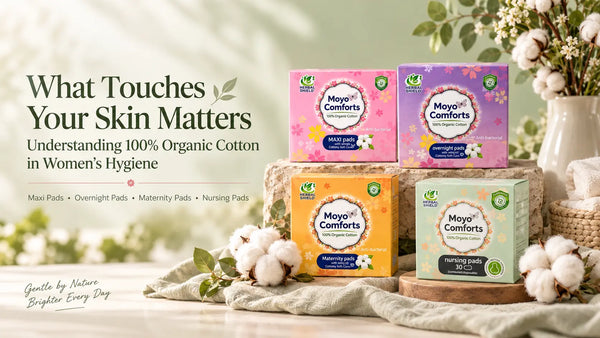
Moyo Comforts is introducing its first 100% Organic Cotton Disposable Nursing Pads as part of the brand’s expanding Mom Care range.
Each pack contains 30 disposable nursing pads designed to absorb breast-milk leakage and help mothers remain dry, comfortable and confident.
Based on Moyo Comforts product information, the nursing pads feature:
- 100% organic cotton
- 30 disposable nursing pads per pack
- Soft skin-contact comfort
- Absorbent leakage protection
- A contoured shape
- Hypoallergenic positioning
- Dermatologist-tested positioning
- Herbal Shield care
- Convenient single-use design
All certification, testing, organic-content and regulatory claims used on packaging or the website should match valid documentation for the exact nursing-pad product.
The most accurate product introduction is:
Meet Moyo Comforts’ first 100% Organic Cotton Disposable Nursing Pads, created for Kenyan mothers who want softness, convenience and confident breast-milk leakage protection.
This statement means it is Moyo Comforts’ first product of this type, not an unsupported claim that no other organic nursing pad has ever been available in Kenya.
Why Choose Moyo Comforts 100% Organic Cotton Nursing Pads?
Moyo Comforts Nursing Pads may be a suitable choice for mothers seeking:
- A soft organic cotton contact surface
- Disposable single-use convenience
- Discreet protection beneath clothing
- Support during work and travel
- Night-time leakage protection
- A contoured design
- A pack of 30 nursing pads
- A product created for breastfeeding routines
The key benefit should be communicated clearly:
Moyo Comforts Nursing Pads help absorb leaking breast milk and support everyday dryness, comfort and confidence.
They should not be presented as products that cure damaged nipples, correct breastfeeding attachment or guarantee infection prevention.
How to Use Moyo Comforts Organic Cotton Nursing Pads
Step 1: Wash Your Hands
Wash and dry your hands before touching a clean nursing pad, nipple or breast.
Step 2: Wear a Clean, Comfortable Bra
Choose a supportive nursing bra that does not feel excessively tight.
A loose bra may allow the pad to move. A very tight bra may create pressure and rubbing.
Step 3: Open the Nursing Pad
Remove one fresh nursing pad and unfold it completely.
Do not use a pad that appears:
- Wet before use
- Dirty
- Torn
- Previously opened
- Contaminated
- Damaged
Step 4: Identify the Correct Side
Place the soft, absorbent side against the nipple and breast.
The outer or adhesive side should face the bra. Any adhesive strip should be attached to the bra fabric only.
Step 5: Centre It Correctly
Position the middle of the pad over the nipple and areola.
Smooth the edges so the pad lies flat and does not fold against the skin.
Step 6: Check the Fit
Close the bra cup and move your arms gently.
The nursing pad should remain secure, discreet and comfortable.
Step 7: Replace It When Damp
Do not wait until the pad is completely saturated.
Replace it whenever it becomes wet, heavy, dirty, folded or uncomfortable.
How Often Should Nursing Pads Be Changed?
There is no fixed changing schedule for every mother because breast-milk leakage varies.
Change the nursing pad when:
- The surface feels damp
- Milk reaches the edges
- Your bra feels wet
- The pad becomes heavy
- It moves or folds
- It develops an unusual smell
- Your skin feels sticky or irritated
- You wake after wearing it overnight
- Cream or ointment contaminates it
Mothers experiencing heavy leakage may need several changes each day. Those with occasional leakage may use fewer.
When nipples are sore, NHS guidance recommends changing breast pads after every feed.
How to Dispose of Disposable Nursing Pads
Remove the used pad gently from the bra.
Fold the milk-covered side inward and wrap it using:
- The original wrapper
- Tissue paper
- A small disposal bag
Place it in an appropriate household waste bin.
Do not flush nursing pads down the toilet.
Wash your hands after disposal and insert a clean pad when needed.
Can Ordinary Nursing Pads Cause Infection?
An ordinary nursing pad does not automatically cause an infection.
Breast or nipple problems may instead be influenced by:
- Wearing a wet pad for too long
- Existing cracked skin
- Poor breastfeeding attachment
- Friction
- Untreated thrush
- Blocked milk ducts
- Mastitis
- Contaminated products
Cracked or damaged nipples and pain that does not improve during the first one to two weeks should be discussed with a healthcare professional or lactation consultant.
Organic nursing pads support comfort and moisture management, but they do not replace professional breastfeeding support.
When Should You Seek Professional Help?
Speak with a doctor, midwife, nurse or qualified lactation consultant when you experience:
- Persistent nipple pain
- Cracked or bleeding nipples
- Pain during every feed
- Blisters or open sores
- Difficulty achieving a comfortable latch
- Unusual nipple discharge
- A breast lump that does not improve
- Burning pain in the nipple or breast
- Symptoms that worsen despite regular pad changes
Seek prompt medical advice for possible mastitis symptoms such as a hot, painful or swollen breast, a hard lump, fever, chills or flu-like symptoms. Redness may be harder to notice on brown or black skin, so heat, swelling, tenderness and texture changes are also important.
Common Myths About Organic Nursing Pads
Myth: Every ordinary nursing pad is harmful
Truth: Properly manufactured ordinary nursing pads may be safe and effective. The materials, fit, absorbency, hygiene and changing frequency are more important than fear-based labels.
Myth: Organic cotton guarantees no irritation
Truth: Organic cotton may feel softer, but wetness, friction, poor fit or individual sensitivity can still cause discomfort.
Myth: Organic nursing pads prevent mastitis
Truth: Nursing pads collect leaking milk. They do not prevent or treat mastitis.
Myth: Organic means completely plastic-free
Truth: A pad may have an organic cotton contact layer while also containing adhesive, absorbent materials or a moisture-resistant backing.
Myth: One absorbent nursing pad can be worn all day
Truth: Every nursing pad should be changed when it becomes damp or soiled.
Frequently Asked Questions
Are organic cotton nursing pads better than ordinary pads?
They may provide a softer skin-contact experience for mothers who prefer organic cotton or find certain synthetic-feeling materials uncomfortable. Fit, absorbency and regular changing remain equally important.
Are ordinary nursing pads unsafe?
Not necessarily. A properly manufactured ordinary nursing pad may be safe and effective. Check its materials, packaging, absorbency and instructions.
Why may Kenyan mothers prefer organic cotton nursing pads?
They offer a soft, disposable and clearly identified cotton option for managing breast-milk leakage during work, travel, sleep and daily routines.
Are Moyo Comforts Nursing Pads the first nursing pads in Kenya?
Moyo Comforts can accurately describe them as the brand’s first 100% Organic Cotton Disposable Nursing Pads for Kenyan mothers. Claiming they are the first ever in Kenya requires independent market evidence.
Is Moyo Comforts Kenya’s No. 1 nursing-pad brand?
That wording should only be used when supported by an independent sales ranking, award or market study. A safer brand line is:
Moyo Comforts, Kenya’s trusted women, mom and baby-care brand.
How many Moyo Comforts Nursing Pads are in one pack?
Each pack contains 30 disposable nursing pads.
Can disposable organic nursing pads be reused?
No. They are designed for one-time use.
Can I wear nursing pads overnight?
Yes. Wear fresh nursing pads inside a comfortable sleep bra and replace them if they become wet during the night or after waking.
Which side touches the breast?
The soft absorbent side faces the nipple. The outer or adhesive side faces the bra.
Do nursing pads reduce breast-milk supply?
No. Nursing pads collect milk that has already leaked outside the breast. They do not directly regulate milk production.
Final Thoughts
What touches sensitive breast and nipple skin matters, especially during the early stages of breastfeeding.
Ordinary nursing pads can vary in their materials, absorbency, shape and comfort. Some may work well, while others may feel stiff, move inside the bra or contain unclear skin-contact materials.
Moyo Comforts 100% Organic Cotton Disposable Nursing Pads provide Kenyan mothers with a soft, clearly identified and convenient option for managing breast-milk leakage.
They are designed for work, travel, sleep and everyday motherhood, with 30 disposable pads in every pack.
Organic cotton is not a medical promise. A nursing pad’s performance also depends on its absorbency, fit, shape and how regularly it is changed. Persistent nipple pain, cracked skin, poor latch or mastitis symptoms still need professional support.
Moyo Comforts introduces a softer standard of breastfeeding care in Kenya,100% organic cotton comfort made for every mothering moment.